 Ironwood
Why we exist, and the view nobody has yet
Each airport keeps its own record: movements, services, permits and tenants, captured as they happen on a phone, a tablet or a desk, and locked to that airport. It shares with a group or a region only when its administrator agrees. The group, the region and the country see patterns, never one airport's figures beside another's. The number you quote is the number the airport recorded.
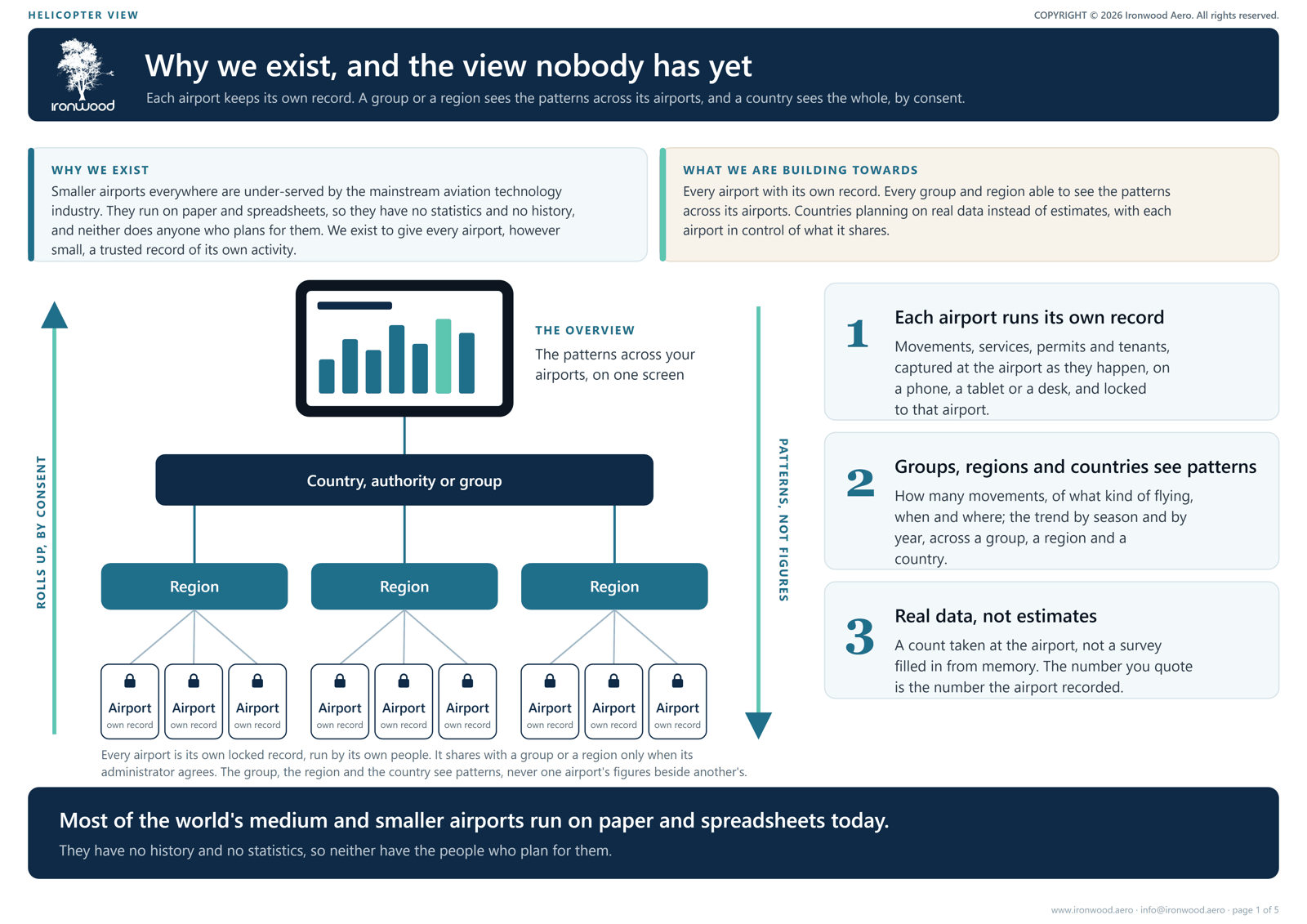
Page 1. Every airport its own locked record; it rolls up by consent, as patterns, not figures.
Every movement, seen and verified
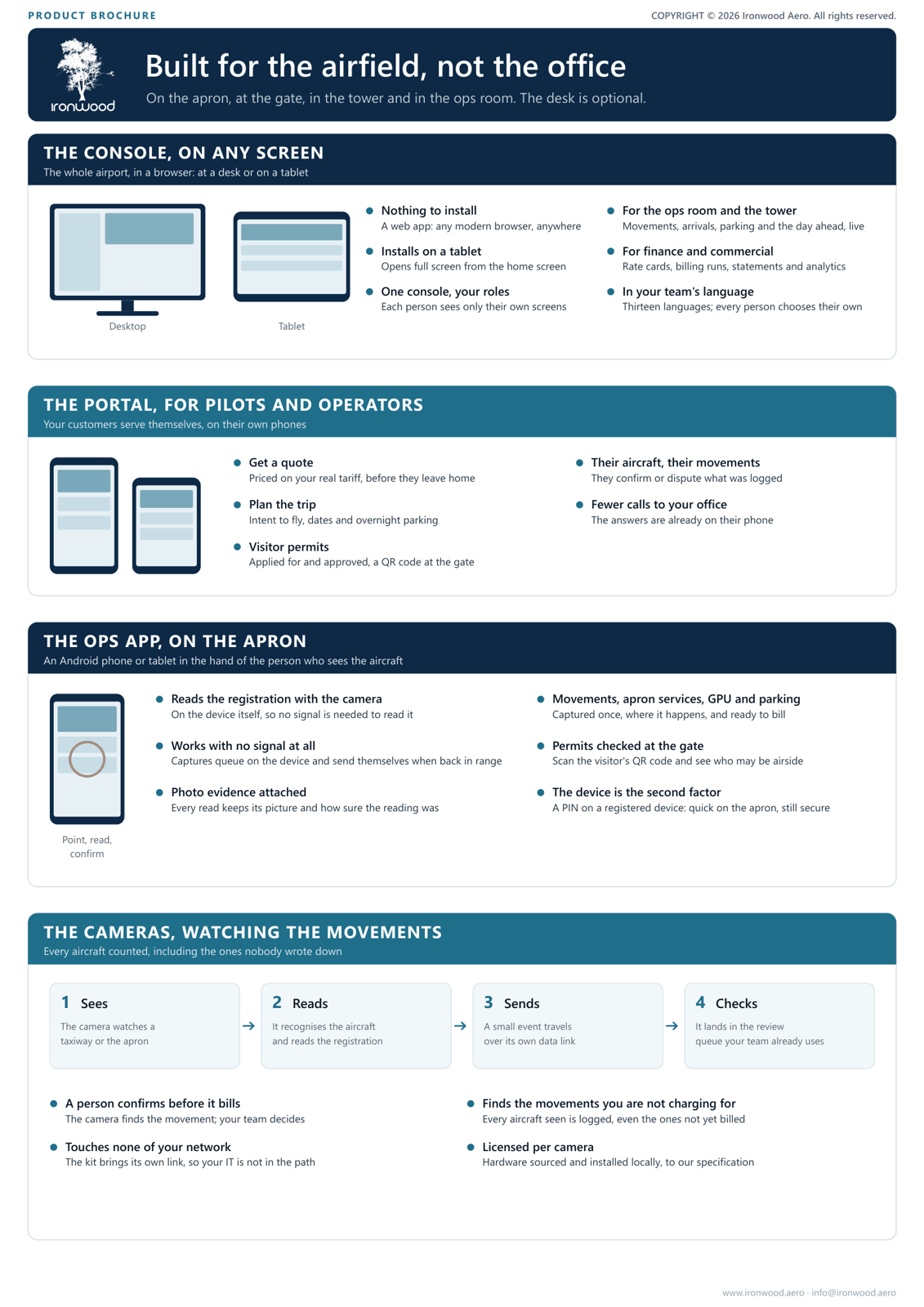
Our own ADS-B receivers on an open design, the tower and the radio, smart cameras on the apron and runway, staff with a phone that works without signal, and the operators and pilots themselves on the portal. Every source feeds one pipeline: received as it happens, cleaned and matched to one aircraft, counted once. An aircraft flying silent is still recorded. No commercial flight tracker ever sees the data, and the paper strips can stay.
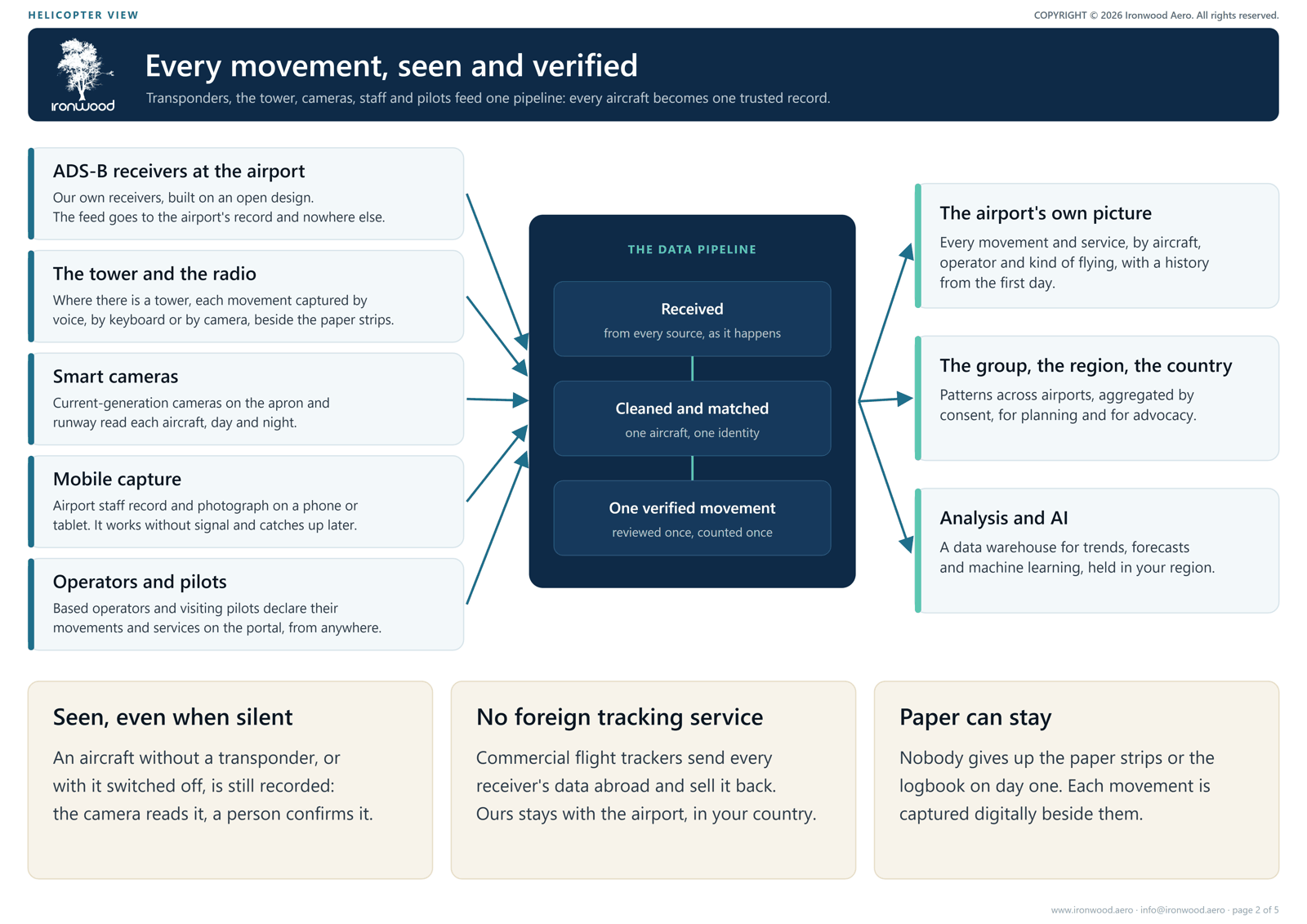
Page 2. Transponders, the tower, cameras, staff and pilots feed one pipeline: every aircraft becomes one trusted record.
What the data tells a group, a region, a country
Transport planning on movements by kind of flying, month and year. Economic development on the activity the airport itself recorded. A climate baseline counted from landings by type and weight, not modelled. Flight training seen as landings, not flights. And for the airport itself, every landing as a wear event: runway wear by end, weight on the pavement, heavy stands, equipment due before it fails. Each airport owns its data and can withdraw its consent at any time.
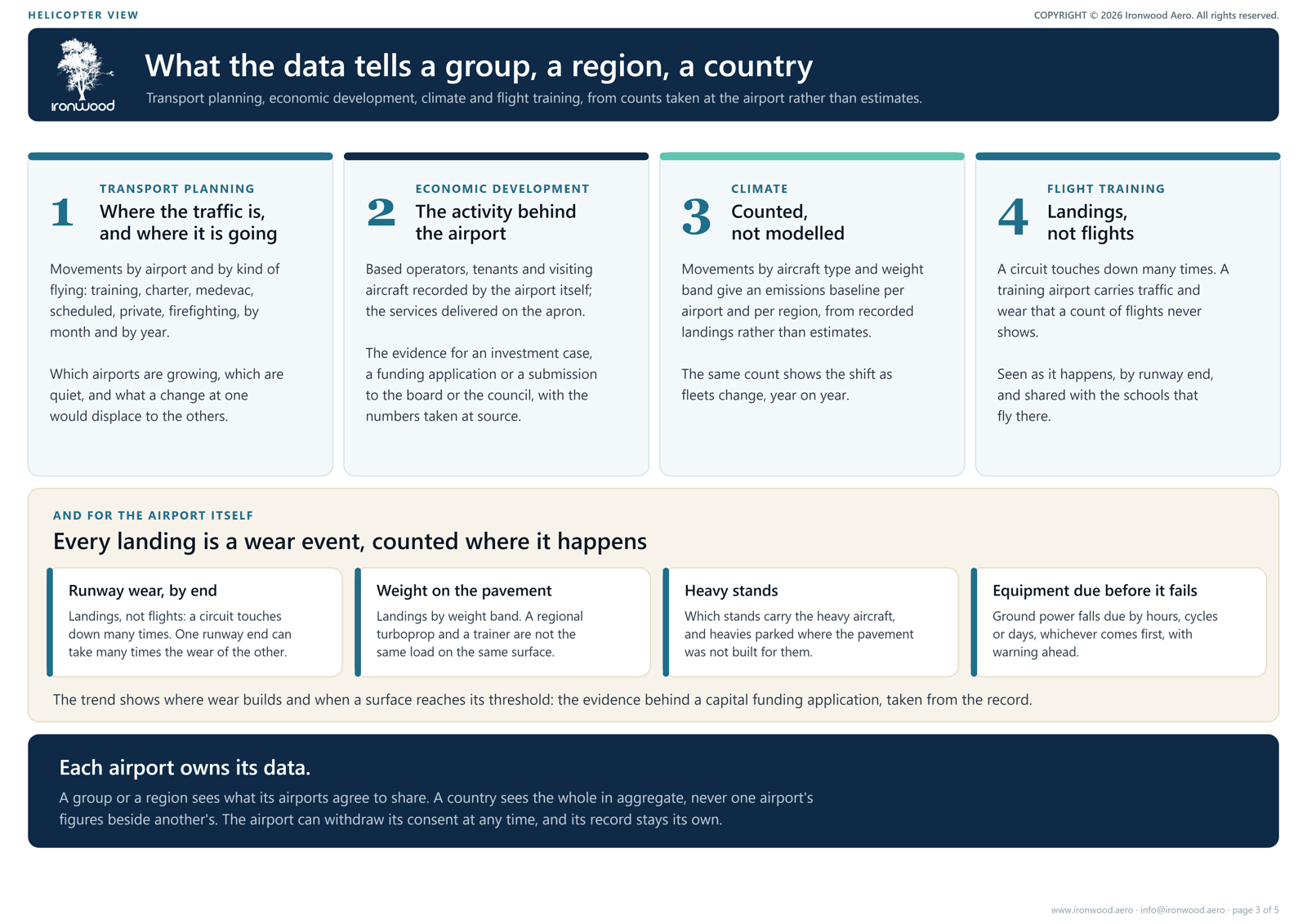
Page 3. Counts taken at the airport rather than estimates, for planning, development, climate and training.
Hosted in your region, by design
Nodes are live in Canada, the United States, Europe and Africa. Your data stays in-country, your backups with it, under the privacy law that applies to you. A partner in your market carries onboarding, training and support, with our engineering behind it. Each airport is locked to itself and every access is checked on the server and logged. Built for the smallest airport, with no analyst and no IT department, in thirteen languages.
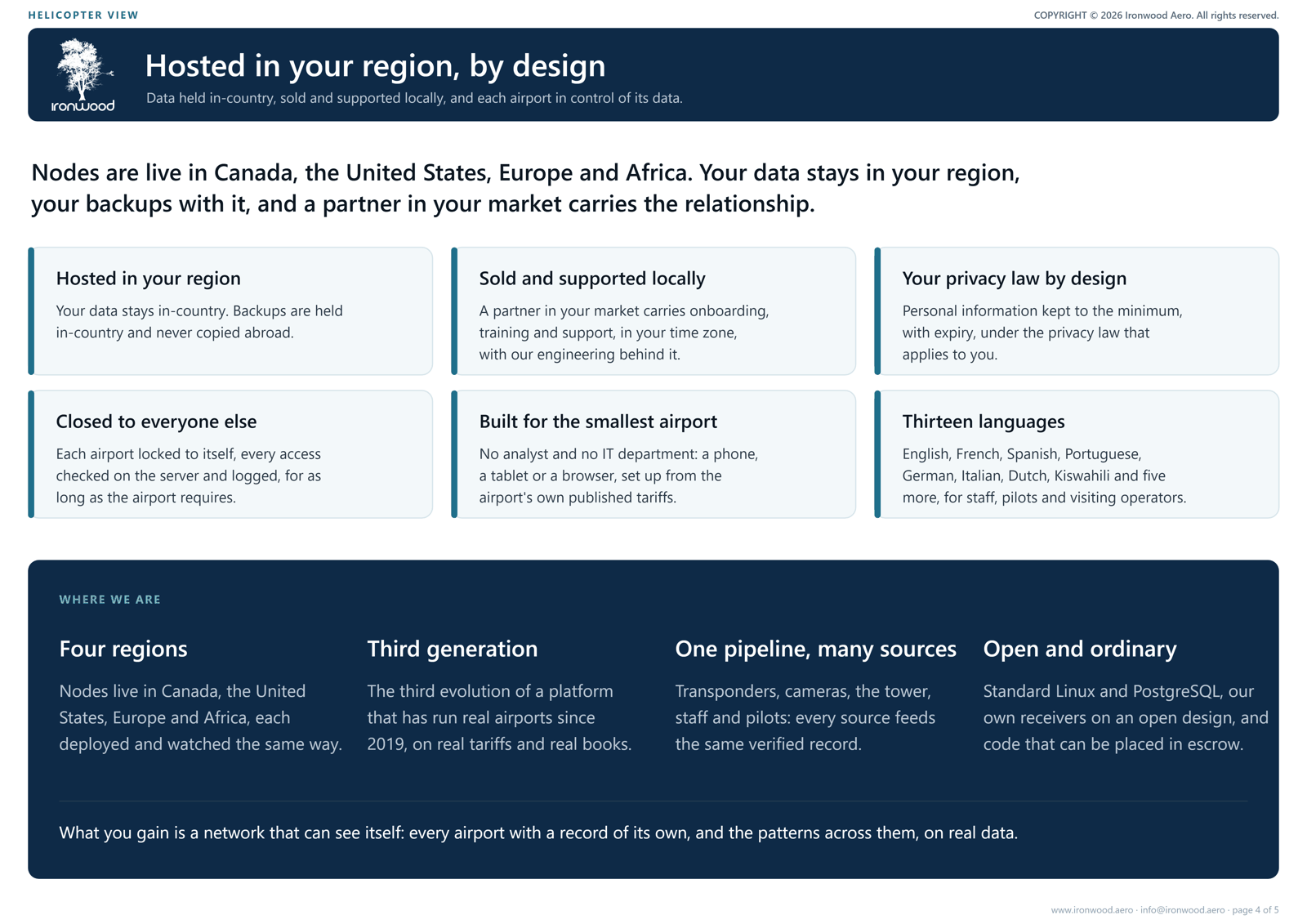
Page 4. Four regions live, the third generation of a platform that has run real airports since 2019, on standard Linux and PostgreSQL.
What is coming: a new class of aircraft is already arriving
Small passenger aircraft for short regional hops, and cargo aircraft with nobody on board, are moving out of trials and into service. They fly frequent, short cycles, so they will use the fields big aviation has always passed over. At peak that is a movement a minute, each needing a permission, a record, a charge and an invoice. No airport on paper will land it. Being ready early is a commercial position, not a technology achievement, and the window is roughly two years. Read the full piece.
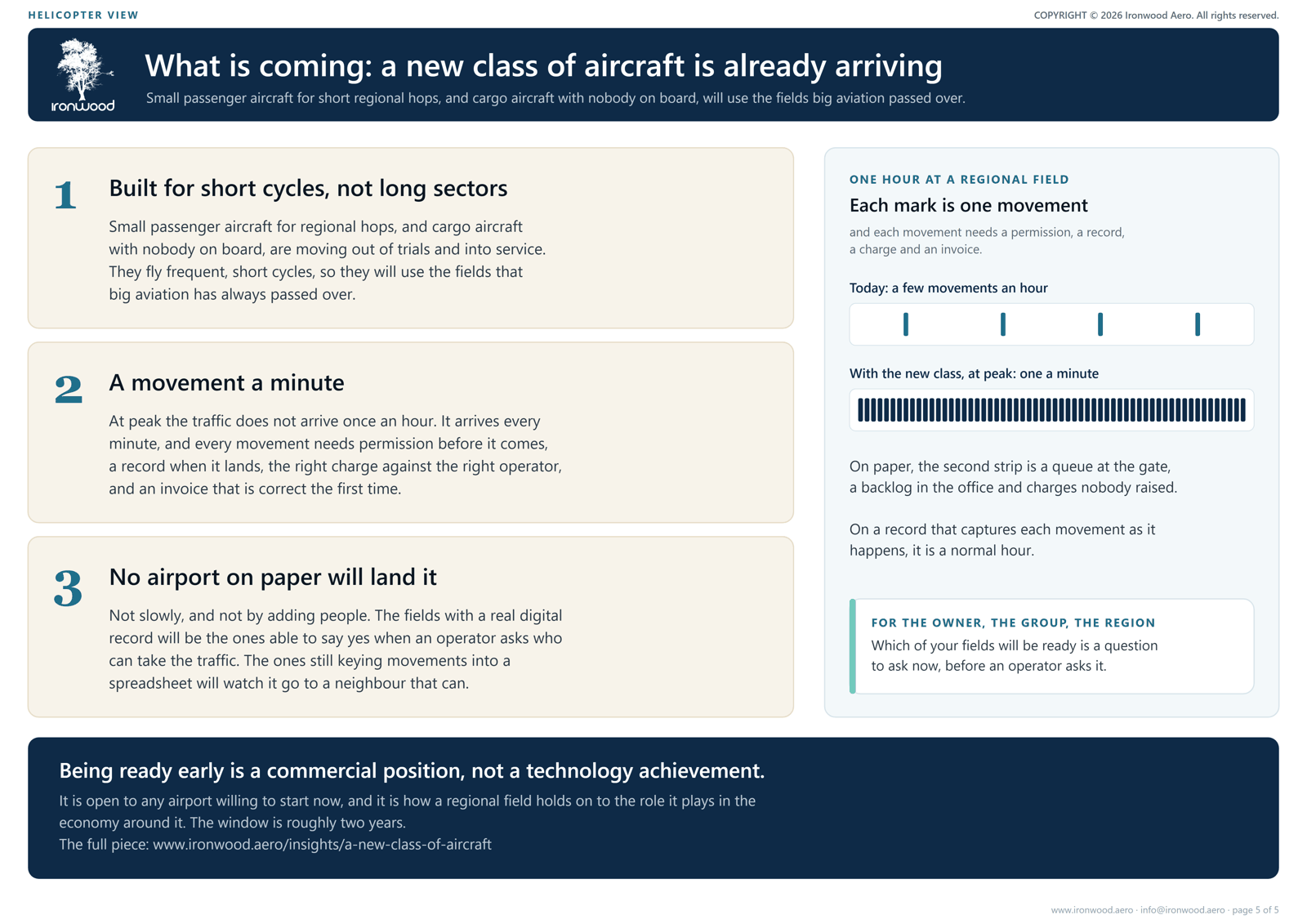
Page 5. One hour at a regional field, today and with the new class at peak: each mark is a movement that needs a permission, a record, a charge and an invoice.
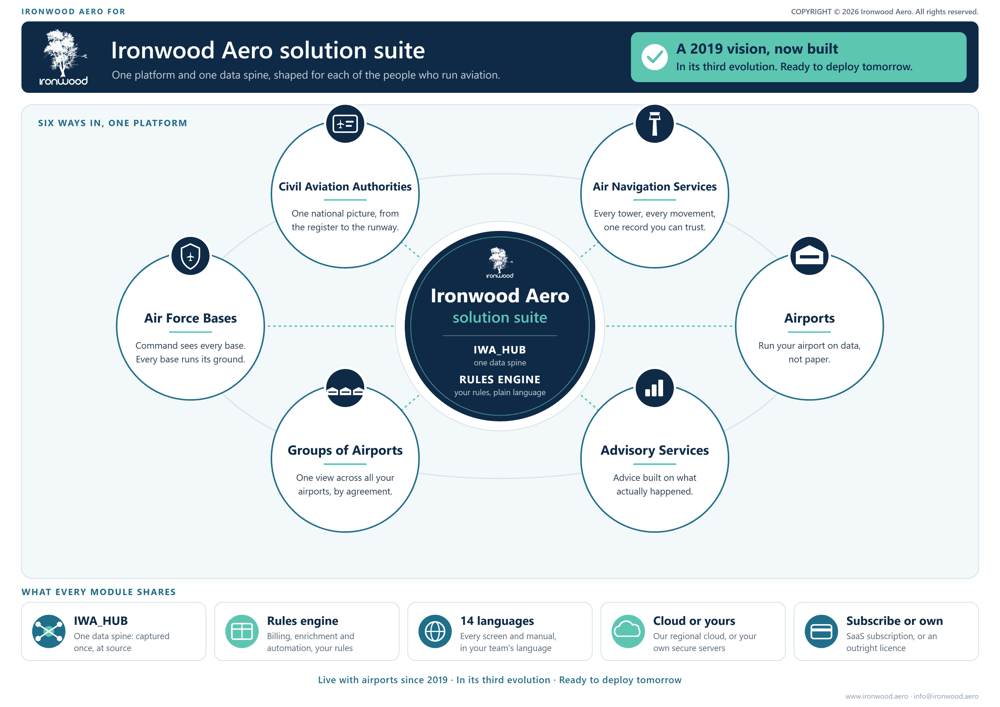
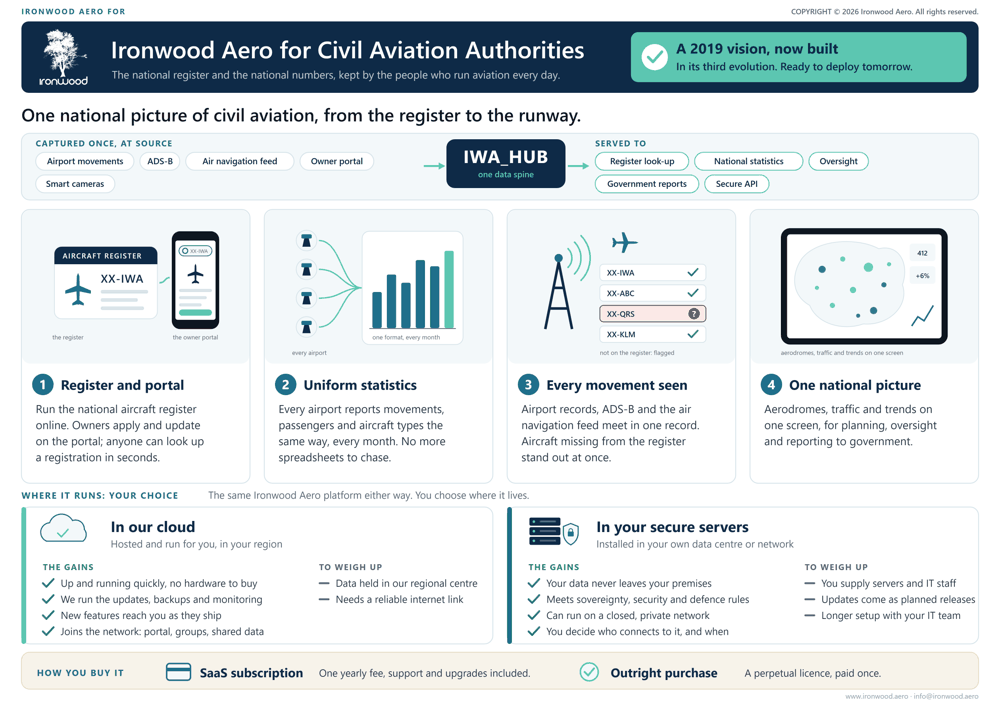 Civil Aviation Authorities
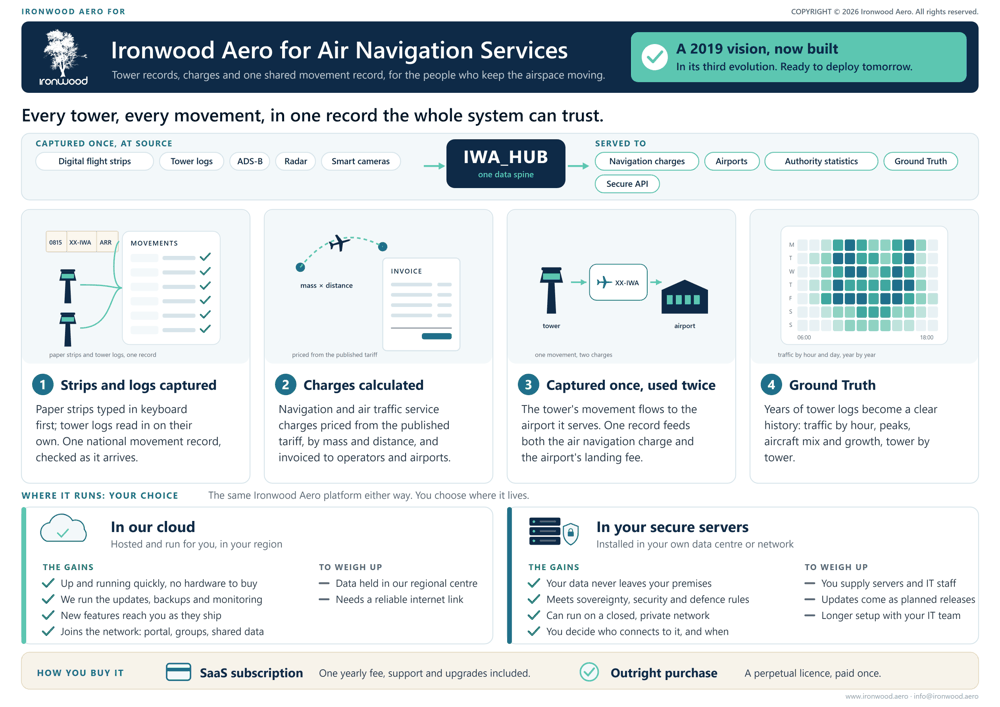 Air Navigation Services
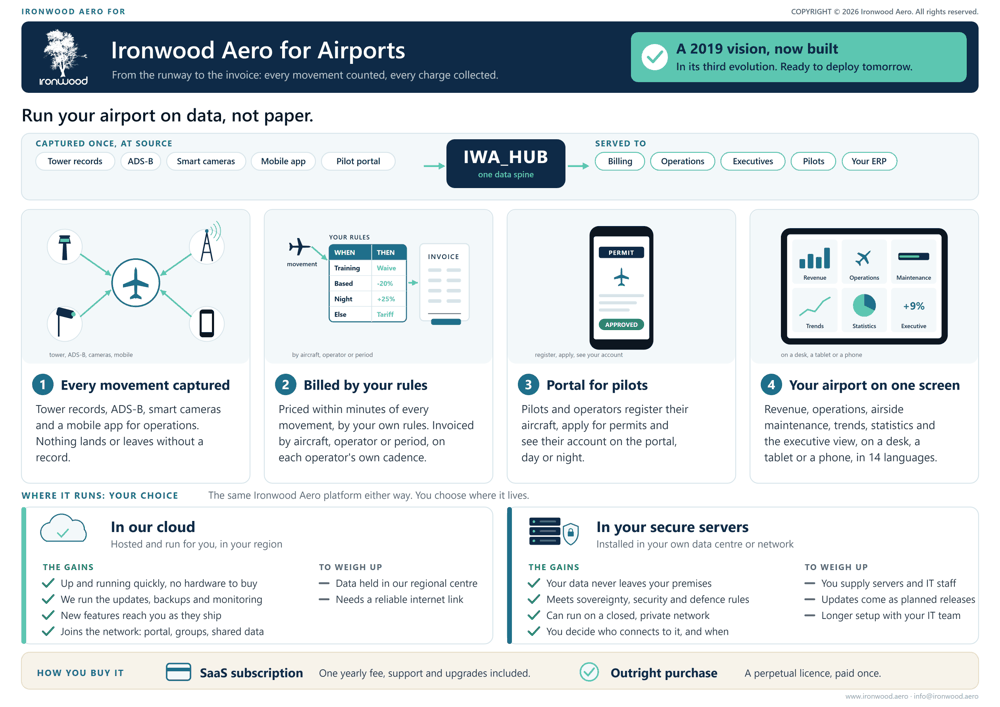 Airports
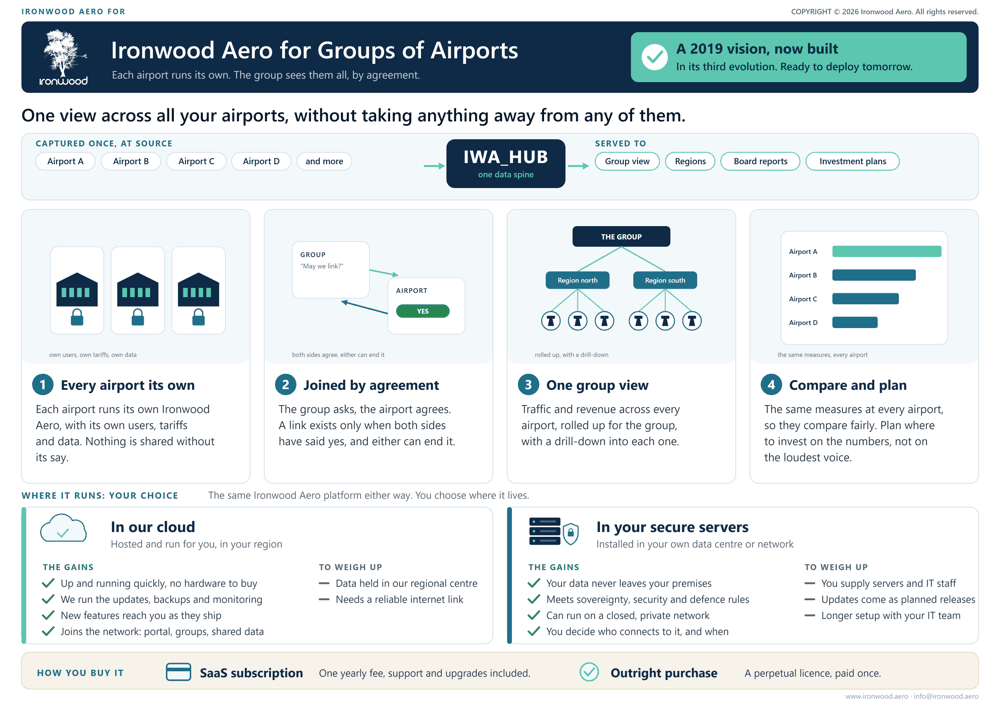 Groups of Airports
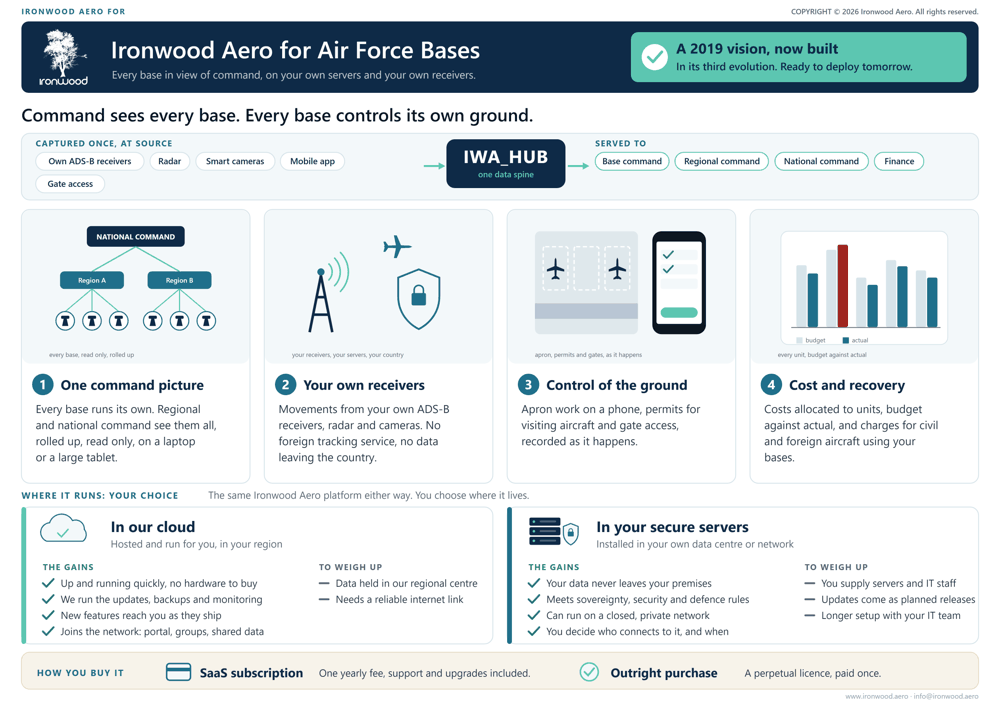 Air Force Bases
 Advisory Services